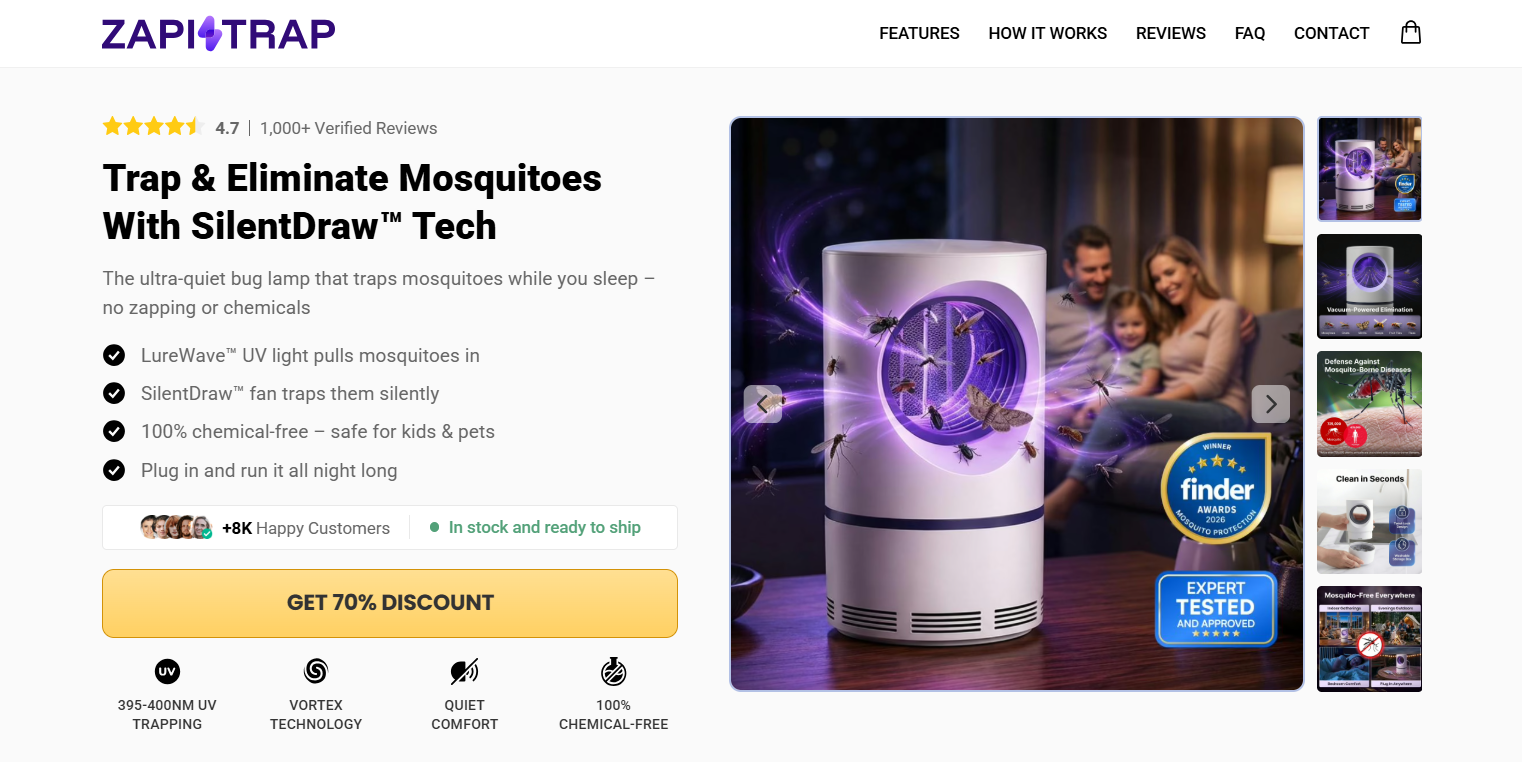
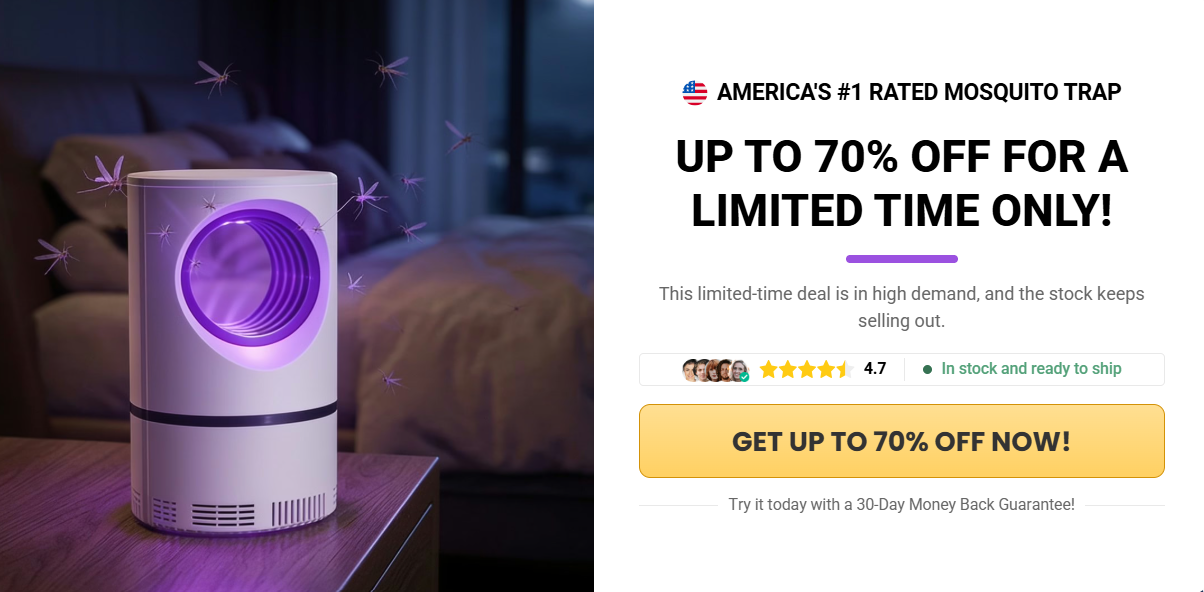
The ZapiTrap Mosquito Lamp is marketed as an indoor insect-trapping device designed to attract flying insects with violet light and draw them into a collection compartment using airflow. According to the seller’s website, the device is intended for bedrooms and other indoor spaces where mosquitoes and small flying insects are a nuisance.
Unlike conventional electric-grid zappers, ZapiTrap is advertised as using a fan-based capture mechanism rather than an electrified grid. Its marketing also emphasizes the absence of insecticide sprays and chemical refills.
But is ZapiTrap the right choice for every home? What features should buyers examine, how does this type of mosquito lamp work, and what limitations should consumers understand before ordering?
This detailed ZapiTrap Mosquito Lamp review examines the advertised design, potential advantages, practical limitations, setup, maintenance, safety considerations, pricing questions, and alternatives. It also explains why catching flying insects should not automatically be interpreted as complete protection against mosquito bites.
What Is ZapiTrap Mosquito Lamp Used For?
ZapiTrap is promoted primarily as an indoor mosquito and flying-insect trap. Its intended purpose is to attract certain insects toward a light source and capture them inside the device.
The manufacturer describes several potential uses:
- Bedrooms where mosquitoes disturb sleep.
- Living rooms where small flying insects appear.
- Kitchens affected by fruit flies or gnats.
- Indoor spaces where users prefer not to rely exclusively on sprays.
- Areas where a quieter alternative to traditional electric-grid zappers is desirable.
The device is advertised for indoor use, but its effectiveness will depend on the room, insect species, competing light sources, placement, and other environmental conditions.
It is important to distinguish between a product’s intended use and independently demonstrated performance. The available marketing information does not establish that ZapiTrap eliminates all mosquitoes from a room or reliably prevents mosquito bites.
How Does ZapiTrap Mosquito Lamp Work?
According to the product website, ZapiTrap combines a violet light source with a fan-based suction mechanism and a collection tray.
1. Violet light attracts insects
The seller describes a light wavelength of approximately 395–400 nanometres. This falls within the violet and near-ultraviolet region of the spectrum.
Some flying insects respond to particular wavelengths of light, which is why light-based insect traps can attract certain species. However, different insects respond differently to light, and mosquitoes may be attracted more strongly to other cues, including human body odours, carbon dioxide, and heat.
Consequently, the presence of violet light alone does not guarantee that a mosquito will approach the device instead of a person.
2. Airflow draws insects toward the collection area
ZapiTrap is advertised as using a built-in fan to draw insects toward an internal collection compartment.
This is different from a conventional electric-grid insect zapper, which kills insects when they contact an electrified grid. A fan-based trap instead attempts to capture insects mechanically.
The actual capture rate depends on factors such as airflow strength, insect behaviour, distance, room conditions, and the device’s construction. Independent performance testing would be needed to determine how effectively the specific ZapiTrap model captures mosquitoes.
3. Insects collect inside a tray
The product website describes a removable tray that users can empty and clean.
A collection tray can make maintenance straightforward, provided the device is designed so that captured insects remain contained. Buyers should consult the supplied instructions for removing, emptying, and cleaning the compartment.
4. The device can operate indoors
ZapiTrap is marketed as a device for indoor spaces. A suitable location may be a bedroom, living room, or kitchen, depending on the manufacturer’s instructions.
Its performance should not be assumed to remain the same in every environment. Bright competing lights, open doorways, airflow from fans, and continued insect entry can all affect the results.
ZapiTrap Mosquito Lamp Features
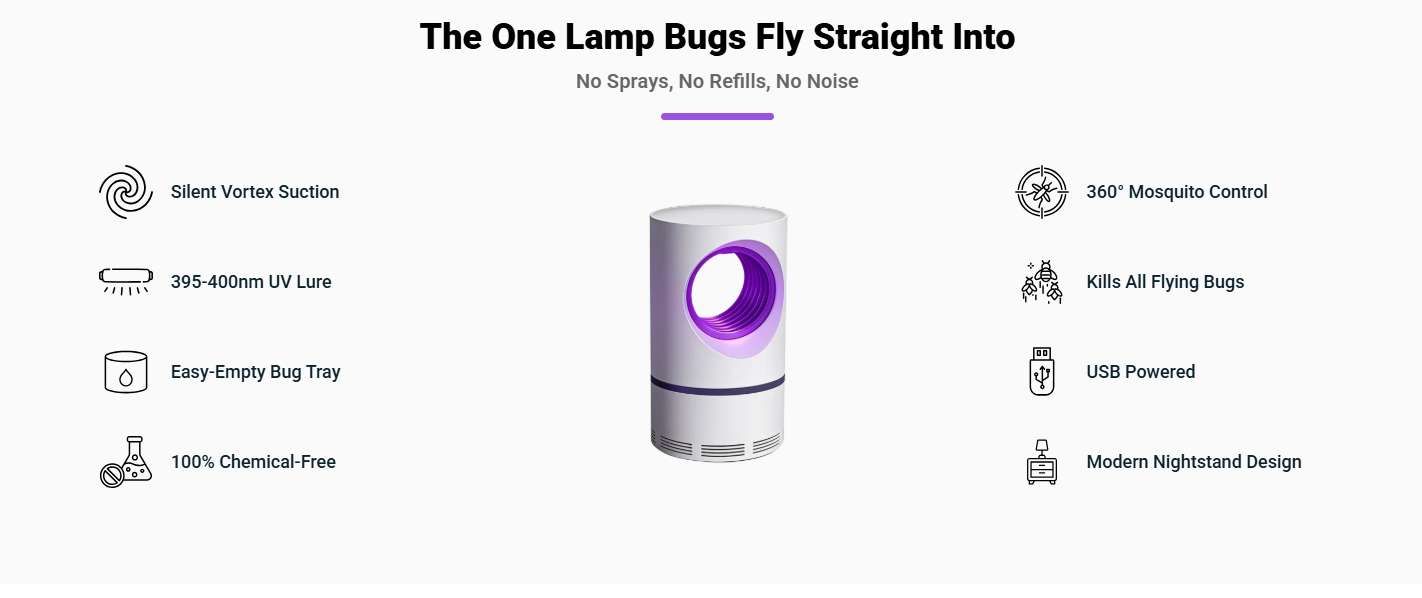
The following features are described in the seller’s product information. They should be checked against the exact model and package being purchased.
Violet light technology
The seller advertises a light wavelength between 395 and 400 nanometres. Light-based attraction can be useful for some flying insects, but wavelength specifications alone do not establish mosquito-control effectiveness.
Fan-based insect capture
The advertised design uses airflow instead of an electric grid. This may appeal to consumers who dislike the snapping sounds associated with some traditional zappers.
The exact operating noise level has not been independently verified here.
No insecticide refills
ZapiTrap is promoted as operating without sprays, coils, or liquid insecticide refills. This may reduce the need to purchase consumable products specifically for the lamp.
However, the device should not be described as universally safer than all alternatives without considering its electrical design, instructions, and the user’s circumstances.
Removable collection tray
A removable tray can simplify disposal and routine cleaning. Buyers should check whether the tray is easy to remove and whether the supplied instructions explain safe cleaning.
USB-powered design
The seller advertises USB power. Before purchasing, confirm whether the package includes a USB cable, power adapter, or both. Do not assume every advertised accessory is included.
Indoor placement
The lamp is promoted for use in indoor rooms. Consumers should follow the manufacturer’s requirements for placement, ventilation, electrical connections, and cleaning.
Potential Benefits of ZapiTrap Mosquito Lamp
A mosquito lamp may offer practical advantages in certain circumstances, although the results depend on the particular device and its environment.
1. An alternative to routine sprays
People who prefer not to use insecticide sprays as their only mosquito-control method may consider a mechanical trap.
A trap does not intentionally disperse an insecticide into the room, according to the advertised ZapiTrap design. This does not mean that every aspect of the device has been independently safety-tested.
2. No routine liquid refills
A reusable electrical device may reduce the need for replacement liquid refills or mosquito-coil purchases.
Consumers should compare the initial price, electricity consumption, expected lifespan, and maintenance requirements before deciding whether it provides long-term value.
3. Potentially quieter operation than electric-grid zappers
Because ZapiTrap is advertised as using a fan rather than a high-voltage grid, it may avoid the sharp snapping sound associated with some grid-based products.
Nevertheless, a fan can produce noise. Check independent reviews or product demonstrations if quiet operation is particularly important.
4. A reusable design
If the lamp remains functional and its collection compartment can be cleaned, it may be reused over multiple seasons.
Durability, repairability, and the availability of replacement parts should be verified rather than assumed.
5. A possible option for small indoor spaces
A compact indoor trap may be convenient for a bedroom or kitchen where flying insects are present.
Its effectiveness will depend on the space and the species involved. One small device should not automatically be expected to control mosquitoes throughout a large home.
Important Limitations to Understand
No responsible product review should discuss only potential advantages. ZapiTrap also has limitations that prospective buyers should consider.
Catching insects does not guarantee fewer bites
This is the most important distinction. A tray containing flying insects demonstrates that insects were captured, but it does not prove that the device prevents mosquito bites.
Even if a trap captures some mosquitoes, others may continue to bite people in the same room. Reliable bite-prevention claims require appropriate testing under relevant conditions.
Light-based traps may not attract every mosquito
Mosquito species differ in their behaviour. Some are more responsive to human odours and carbon dioxide than to light.
A lamp that attracts moths, gnats, or other flying insects may not necessarily capture mosquitoes at a rate sufficient to protect someone sleeping nearby.
Room conditions affect results
Other lights, open windows, airflow, room size, and nearby sources of insects may affect the device’s performance.
For this reason, results from one household may not predict results in another.
Product-specific evidence is limited
The seller describes the mechanism and its intended benefits, but the information reviewed does not establish a reliable, independently verified mosquito-bite reduction rate for ZapiTrap.
Consumers should be cautious about guarantees of completely mosquito-free nights unless credible testing supports those claims.
Online purchasing conditions matter
Promotional discounts and bundle offers may look attractive, but the total cost can include shipping, taxes, and possible return expenses.
Before ordering, review the seller’s identity, delivery estimates, warranty, refund conditions, and return address.
How to Use ZapiTrap Mosquito Lamp
If you purchase the device, follow the instructions supplied with your specific model. The following general steps apply to many indoor insect traps.
Step 1: Select an appropriate location.
Place the device on a stable, dry surface in the indoor area where insects are a problem. Avoid locations where it can be knocked over or exposed to water.
Step 2: Check the power connection.
Use only a compatible power source as specified in the product instructions. Keep cables away from walkways, moisture, and young children.
Step 3: Reduce competing light sources when appropriate.
Light-based traps may perform differently when other bright lights are present. Follow the manufacturer’s placement guidance and avoid assuming that darkness alone will guarantee results.
Step 4: Allow the device to operate as instructed.
Observe the results over a reasonable period rather than judging performance solely from one night. Record whether mosquitoes are actually being captured instead of counting all insects as mosquitoes.
Step 5: Inspect the collection tray.
Disconnect the device before cleaning whenever the instructions require it. Empty and clean the removable compartment as directed, and ensure that any washable component is fully dry before reinstalling it.
Step 6: Evaluate the actual outcome.
If mosquitoes continue to bite despite the lamp operating, do not rely on the device as your only protection. Use established mosquito-control measures and reconsider whether the product meets your needs.
ZapiTrap Mosquito Lamp Safety Considerations
Electrical devices should be used according to their instructions, regardless of whether they are marketed as chemical-free.
- Keep the device away from water and wet surfaces.
- Use a compatible power supply.
- Keep cables and small detachable parts away from children.
- Do not open or modify the electrical components.
- Disconnect the unit before cleaning when instructed.
- Do not block the ventilation openings.
- Keep the device away from heat sources and flammable materials.
- Stop using it if the cable, plug, or housing becomes damaged.
The absence of an insecticide in the advertised trapping mechanism does not make every possible use risk-free. Follow the product’s electrical and cleaning instructions.
Is ZapiTrap enough to prevent mosquito-borne illness?
No consumer mosquito lamp should be assumed to provide complete protection against mosquito-borne diseases.
Depending on local public-health advice, established precautions can include using an appropriate registered insect repellent, wearing protective clothing, installing or repairing window screens, and eliminating standing water where mosquitoes breed.
In areas where mosquito-borne illness is a concern, follow local health guidance rather than relying on an unverified trapping device.
ZapiTrap Mosquito Lamp Compared With Other Mosquito-Control Methods
Different methods address different parts of the mosquito problem.
| Method | Main purpose | Important limitation |
|---|---|---|
| ZapiTrap-style light and fan trap | Attempts to attract and capture flying insects | Capture effectiveness against mosquitoes requires verification |
| Mosquito net | Creates a physical barrier around a sleeping person | Must be intact and used correctly |
| Window and door screens | Help prevent mosquitoes entering a building | Gaps or damaged mesh reduce protection |
| Registered insect repellent | Helps protect exposed skin | Must be selected and used according to its label |
| Electric mosquito bat | Allows a user to kill insects on contact | Requires active use and does not prevent entry |
| Standing-water removal | Reduces potential mosquito breeding sites | Requires regular inspection and maintenance |
A combination of appropriate measures may be more effective than relying on any single device.
Is ZapiTrap Mosquito Lamp Worth Buying?
Whether ZapiTrap is worth considering depends on what you expect it to accomplish.
If you want a reusable indoor insect trap that does not rely on insecticide refills, its advertised design may be of interest. A fan-based mechanism may also appeal to someone who prefers to avoid electric-grid zappers.
However, if your primary goal is dependable protection from mosquito bites while sleeping, there is an important evidence gap. The available product information does not establish that ZapiTrap consistently prevents bites or provides complete protection in an occupied room.
Before purchasing, consider these questions:
- Is the seller’s identity clearly disclosed?
- Is the final price visible before payment?
- Are shipping charges and delivery times clear?
- Can you return a used device if it fails to meet expectations?
- Is the return address disclosed before ordering?
- Are the claimed results supported by independent testing?
- Are the included accessories and warranty clearly described?
The seller’s website advertises a 30-day guarantee, but consumers should read the complete terms and confirm whether testing the product overnight affects return eligibility.
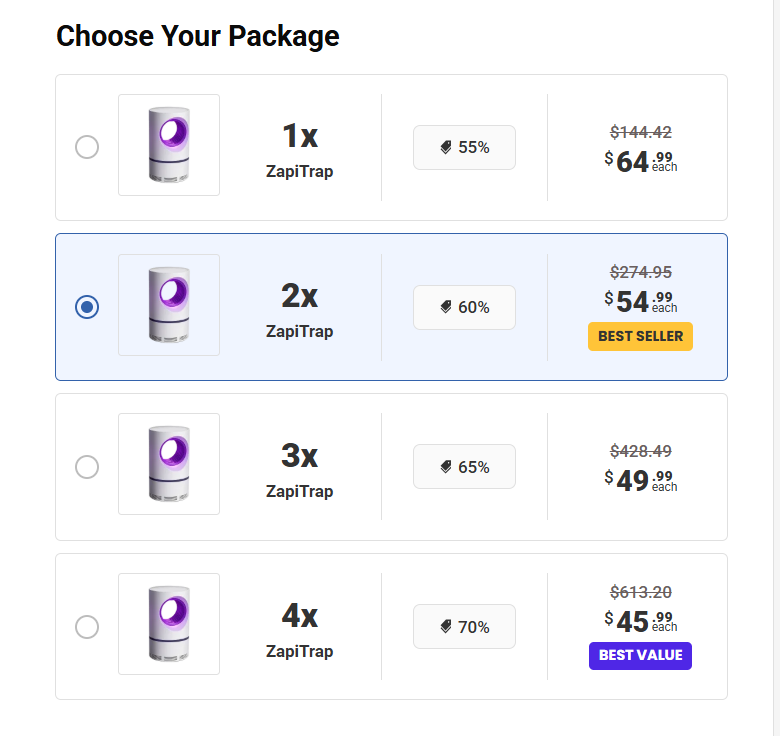
Pricing, Discounts, and Where to Buy
ZapiTrap is advertised through its product website, where promotions and multi-unit packages may be offered.
Prices, discounts, shipping costs, and bundle selections can change. Rather than relying on a promotional headline, check the final checkout amount before submitting payment.
Review the following details carefully:
Product price: Confirm the current price for the exact number of units selected.
Shipping: Check whether delivery is included or charged separately.
Taxes and import fees: Depending on the destination, additional charges may apply.
Return policy: Determine whether opened or used devices qualify for a refund.
Warranty: Confirm the duration, coverage, and process for reporting a defective product.
Payment security: Use a payment method that provides appropriate transaction records and dispute options.
The official product website is ZapiTrap.org. Verify the seller, checkout domain, and terms before placing an order.
Frequently Asked Questions About ZapiTrap Mosquito Lamp
1. What is ZapiTrap Mosquito Lamp?
ZapiTrap is marketed as an indoor insect trap that combines violet light with fan-based suction to collect flying insects in a removable compartment.
2. Does ZapiTrap use insecticide?
The seller advertises a trapping mechanism that does not release insecticide into the air. Confirm the specifications of the exact model before purchasing.
3. Does ZapiTrap actually catch mosquitoes?
The seller claims that it attracts and captures mosquitoes and other flying insects. Its independent mosquito-capture performance has not been established here, so results should not be guaranteed.
4. Can ZapiTrap eliminate all mosquitoes in a bedroom?
There is no verified basis for promising that it will eliminate every mosquito in a bedroom. New insects may enter, and some mosquitoes may not be attracted to the lamp.
5. Is ZapiTrap suitable for kitchens?
The seller describes it as useful in indoor areas where flying insects are present. Follow the instructions for safe placement and keep it away from water, food-preparation surfaces, and moisture.
6. Is ZapiTrap completely silent?
The device is advertised as quieter than electric-grid zappers because it uses airflow. A fan may still produce noise, and an independently verified sound level was not available.
7. Does it require replacement refills?
The advertised design does not use routine insecticide refills. It still requires electricity and routine cleaning, and its long-term durability has not been independently verified.
8. Is ZapiTrap safe around children and pets?
Follow the supplied safety instructions. Keep electrical cables, detachable parts, and the device itself out of reach where necessary. Do not assume that every product is safe in every household situation simply because it is marketed as chemical-free.
9. How often should the collection tray be cleaned?
Follow the manufacturer’s instructions and inspect the tray regularly. Disconnect the device as directed before cleaning and ensure washable parts are completely dry before reassembly.
10. Does ZapiTrap work outdoors?
The product is primarily promoted for indoor use. Outdoor performance should not be assumed without explicit manufacturer instructions and suitable testing.
11. Can I rely on ZapiTrap to prevent mosquito bites?
No. A mosquito lamp should not replace established bite-prevention measures, particularly where mosquito-borne illnesses are a concern.
12. Does ZapiTrap offer a money-back guarantee?
The seller advertises a 30-day guarantee. Read the complete return terms and obtain clarification about used-product eligibility, postage, and the approved return destination before ordering.
Final Verdict: Should You Buy ZapiTrap Mosquito Lamp?
ZapiTrap Mosquito Lamp is marketed as a reusable indoor insect trap that uses violet light and fan-based suction rather than a conventional electric-grid mechanism. Its advertised design may appeal to consumers seeking an alternative to sprays, coils, and refill-based devices.
Nevertheless, the distinction between capturing insects and preventing mosquito bites is crucial. Product descriptions, promotional photographs, and customer testimonials cannot independently establish how effectively a particular lamp protects people from mosquitoes.
Potential buyers should carefully review the price, seller information, return conditions, warranty, and evidence supporting the product’s claims. A clear understanding of these details can help avoid disappointment.
Our conclusion: ZapiTrap may be worth investigating as an indoor insect-trapping device, but its effectiveness should not be overstated. If your main concern is avoiding mosquito bites, prioritize established protective measures and do not depend on this lamp alone.
A careful purchasing decision should be based on verified specifications, transparent terms, credible performance evidence, and realistic expectations—not just attractive discounts or promises of uninterrupted, bite-free sleep.
SEO meta description: Read our ZapiTrap Mosquito Lamp review covering advertised features, how it works, potential benefits, limitations, safety, pricing, customer considerations, and whether it is worth buying in 2026.