
Lottery games have always attracted people who enjoy the excitement of selecting numbers and waiting for a draw. With the growth of artificial intelligence, a new category of lottery-related software has appeared, promising to analyze historical information and help users identify potentially interesting number combinations. Apollo Intelligence is presented as an AI-Powered Lottery Prediction Engine, designed around the idea of using data analysis and computational techniques to generate lottery number suggestions.
But what exactly is Apollo Intelligence, how might such a system work, and what should users realistically expect from it? This article takes a closer look at the concept, potential features, advantages, limitations, and important considerations before using any lottery prediction software.
What Is Apollo Intelligence?
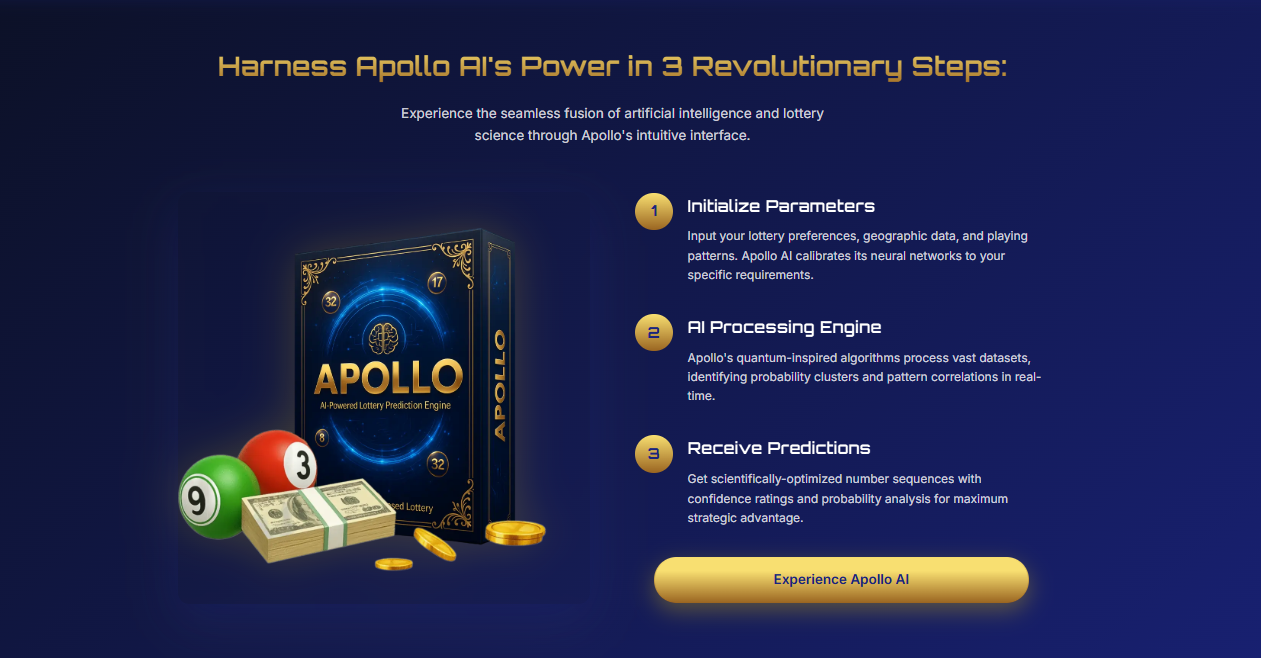
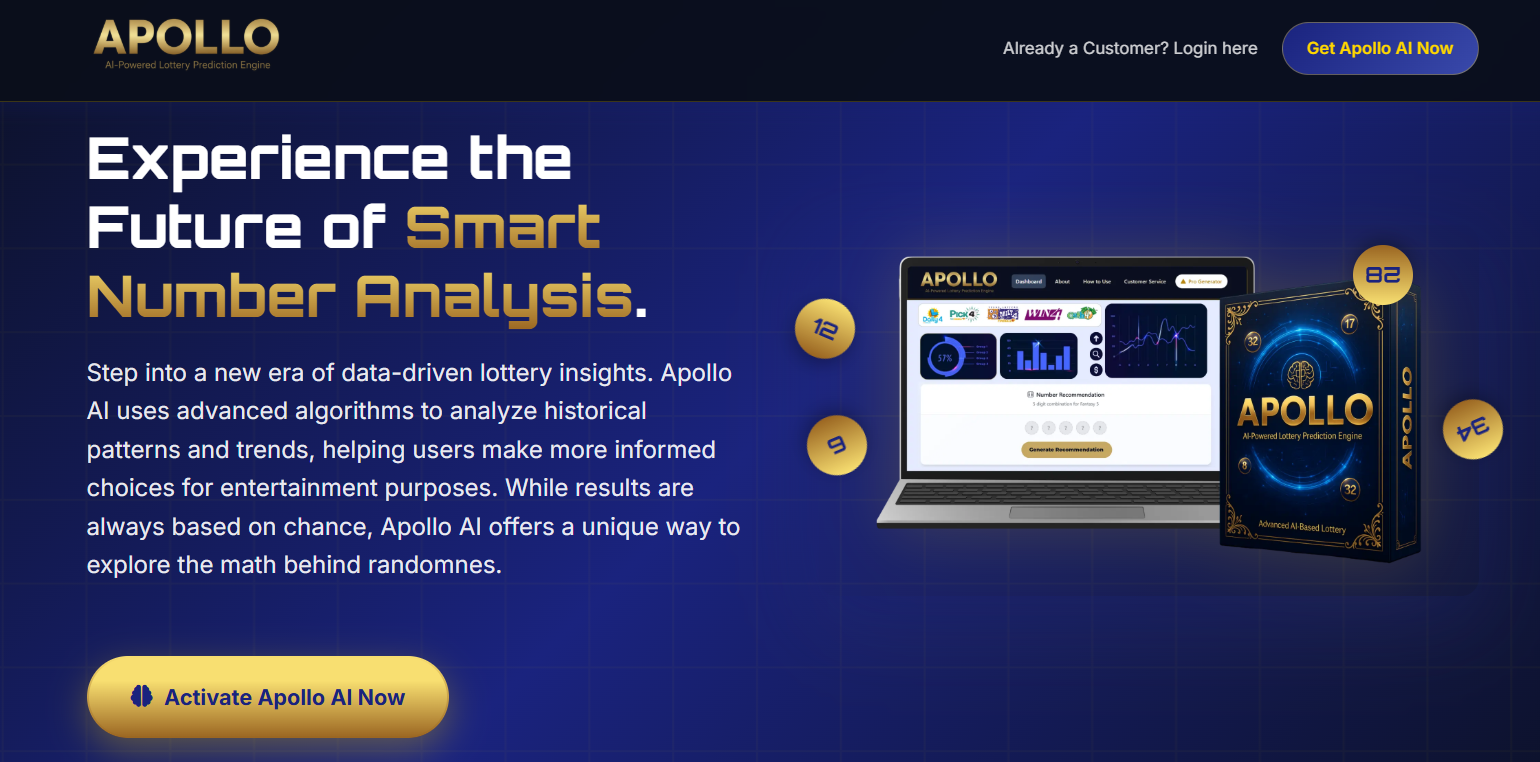
Apollo Intelligence is presented as a technology-based lottery analysis and number-selection tool. The product imagery describes it as an “AI-Powered Lottery Prediction Engine.” Rather than functioning like a traditional lottery ticket generator that simply produces random numbers, the concept behind Apollo Intelligence is based on analyzing available lottery data and using algorithms to generate suggested combinations.
The appeal is easy to understand. Lottery draws can involve large amounts of historical information, including previously drawn numbers, frequencies, combinations, and other statistical patterns. An automated system can process this information much faster than a person manually examining draw histories.
However, an important distinction needs to be made: analysis is not the same thing as prediction. Legitimate lottery draws are generally designed to be random, meaning historical results cannot reliably determine the exact numbers that will appear in a future draw.
Therefore, Apollo Intelligence should be viewed as a number-analysis or selection aid rather than a guaranteed method of winning.
How Could an AI Lottery Prediction System Work?
Artificial intelligence and statistical software can process large datasets and identify patterns or relationships within them. For a lottery-related application, this might include historical draw results and statistical characteristics of individual numbers.
A system could potentially examine factors such as:
- Number frequency
- Recent draw history
- Number combinations
- Even and odd distributions
- High and low number distribution
- Number ranges
- Repeated numbers
- Historical patterns
- Statistical relationships
An algorithm could then use these observations to produce a selection of numbers that meet particular statistical criteria.
For example, if a lottery has numbers from 1 to 50, software could analyze thousands of previous draws and categorize how often each number appeared. It could then generate combinations based on selected statistical characteristics.
That may make the number-selection process more structured, but it does not change the mathematical odds of a genuinely random lottery draw.

Apollo Intelligence Features
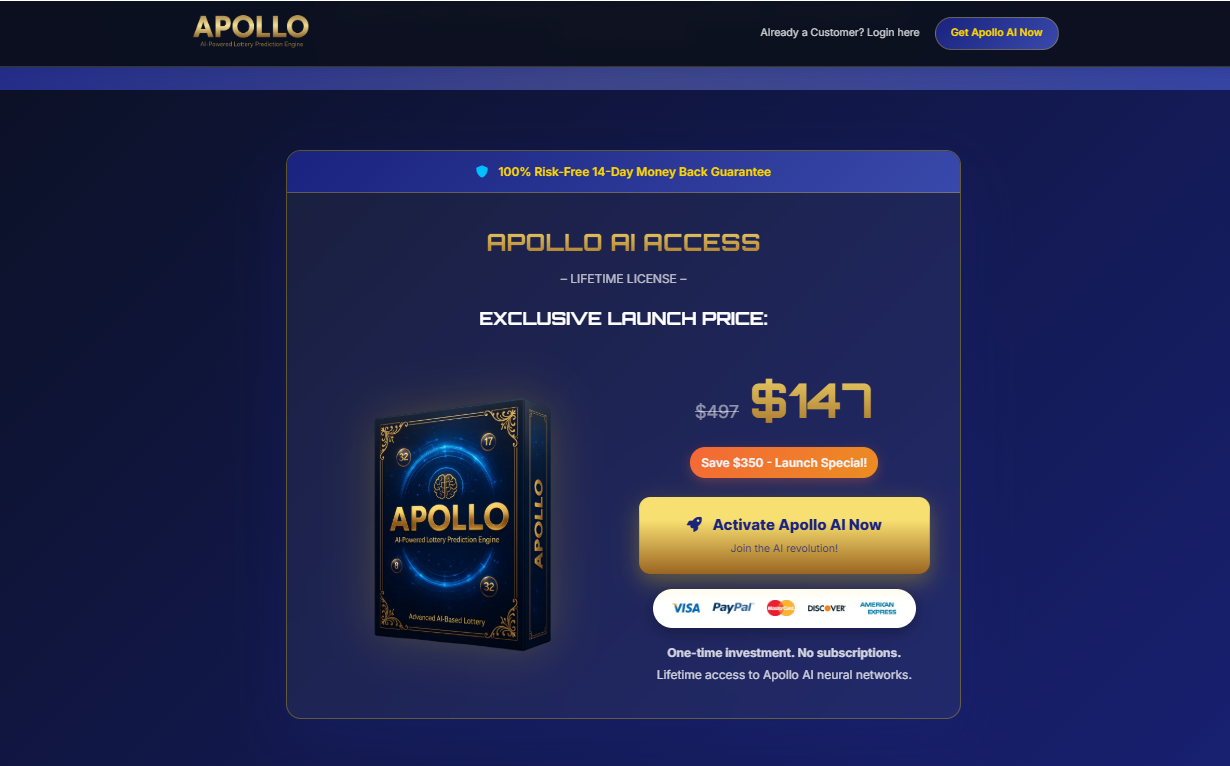
The exact capabilities available to users can depend on the particular version, website, or service associated with Apollo Intelligence. Based on its positioning as an AI-powered lottery prediction engine, the main attraction is its emphasis on automated analysis.
AI-Based Number Analysis
The central concept is the use of algorithms to examine lottery information and produce number recommendations. This can save users from manually studying historical results.
Instead of creating combinations entirely by intuition, users may be able to rely on a data-driven approach to organize their selections.
Historical Data Analysis
Historical lottery results can contain useful information from a statistical perspective. Apollo Intelligence’s concept revolves around using past data as part of its analysis.
Users interested in statistics may find this more convenient than collecting draw results and analyzing them manually.
Automated Number Suggestions
Another potential benefit is automation. A lottery participant may not want to spend significant time choosing combinations. An automated engine can provide suggestions quickly, making the process more convenient.
Data-Driven Approach
Many lottery players choose numbers based on birthdays, favorite numbers, previous winning numbers, or personal preferences. An analytical system offers a different approach by focusing on mathematical and statistical information.
This does not necessarily make the selections more likely to win, but it can make the process more systematic.
Can Apollo Intelligence Actually Predict Winning Lottery Numbers?
This is one of the most important questions to consider.
No lottery software can legitimately guarantee future winning numbers when the underlying lottery draw is random.
Artificial intelligence can analyze existing data, but it cannot reliably know the outcome of a future random event.
Suppose a particular number appeared frequently during the previous 100 draws. An algorithm can identify that frequency. But there is no mathematical requirement for that number to appear again in the next draw.
Likewise, a number that has not appeared recently is not automatically “due.”
This is known as the gambler’s fallacy: assuming that previous independent outcomes create an obligation for a particular future outcome.
Consequently, claims suggesting that Apollo Intelligence—or any other lottery system—can consistently predict exact winning numbers should be treated carefully.
Why Are Lottery Prediction Tools Popular?
The popularity of lottery prediction systems comes from a combination of technology and psychology.
People naturally look for patterns. When thousands of lottery results are available, it can be tempting to believe that those results contain clues about what will happen next.
AI makes this process even more attractive because algorithms can examine enormous amounts of information quickly.
There is also a convenience factor. Instead of spending hours looking through lottery archives, a user can potentially use software to organize information and generate selections automatically.
For some people, the main benefit may therefore be decision support and entertainment, rather than a guaranteed financial strategy.
Potential Benefits of Apollo Intelligence
When approached realistically, a lottery analysis platform can offer several practical advantages.
Saves Time
Manual analysis of hundreds or thousands of lottery draws can be tedious. Automated software can process information much faster.
Provides Structured Selections
Some players struggle to decide which numbers to choose. An algorithmic approach can provide structured combinations instead of relying entirely on personal preferences.
Encourages Statistical Thinking
A tool based on historical data can introduce users to concepts such as frequency, distribution, probability, and randomness.
Reduces Emotional Number Selection
People often select numbers because they have personal meaning. A data-oriented system can provide an alternative for users who prefer a more systematic approach.
Convenient
Automation can make the number-selection process easier, particularly for users who regularly participate in lottery games.
Limitations You Should Know
Despite the appeal of AI-powered lottery analysis, there are significant limitations.
Random Draws Remain Random
The most important limitation is that historical data cannot guarantee future lottery results.
Even sophisticated algorithms cannot overcome the fundamental probability involved in a genuinely random draw.
Past Performance Does Not Guarantee Future Results
A number appearing frequently in previous draws does not mean it has a greater chance of appearing in the next draw.
Every eligible combination continues to face the probabilities defined by the particular lottery.
AI Does Not Create Guaranteed Winning Strategies
The term “AI” can sound extremely powerful. However, artificial intelligence is only as effective as the data and mathematical assumptions behind the system.
Using AI does not magically eliminate randomness.
Financial Risk
Lottery participation involves spending money with uncertain outcomes. Users should never spend more than they can comfortably afford to lose.
A prediction tool should not be treated as an investment strategy or a guaranteed source of income.
Apollo Intelligence Reviews: What Should Buyers Check?
Anyone considering Apollo Intelligence should perform their own due diligence before paying for a service or software product.
First, determine exactly what is being sold. Is it downloadable software, a subscription, a web-based platform, access to number suggestions, or another type of service?
Second, check the official terms and conditions. Look for information regarding subscriptions, automatic renewals, refunds, privacy, and customer support.
Third, examine how the product describes its performance. Be cautious of language suggesting guaranteed winnings, risk-free lottery profits, or certainty about future results.
Independent reviews can also be useful, but they should be evaluated critically. A testimonial or promotional review is not the same as independently verified statistical evidence.
Is Apollo Intelligence Worth Considering?
Whether Apollo Intelligence is worthwhile depends heavily on what a user expects from it.
Someone looking for an entertaining way to generate structured lottery combinations may appreciate the concept. The automation and statistical approach could make number selection more interesting and convenient.
On the other hand, anyone expecting an AI system to accurately forecast future winning lottery numbers may be disappointed. Random lottery draws cannot be reliably predicted simply by analyzing historical results.
The best way to evaluate Apollo Intelligence is therefore to separate software functionality from winning claims.
If the product provides useful analytical tools, convenient number generation, and transparent information about its methodology, it may have value as an entertainment or statistical-analysis tool. But it should not be considered a guaranteed money-making system.
Responsible Lottery Use
Lottery games should always be approached responsibly.
Before purchasing tickets, decide on a fixed entertainment budget. Never borrow money or use essential household funds to participate. Avoid increasing spending because of previous losses.
It is also important to remember that no number-selection method can eliminate lottery risk.
If a particular combination is suggested by Apollo Intelligence, another AI system, a statistical website, or a personal strategy, it remains a lottery selection—not a guarantee.
The safest mindset is to consider any potential winnings a possibility rather than an expected return.
Final Verdict on Apollo Intelligence
Apollo Intelligence is presented as an AI-powered lottery prediction engine, bringing data analysis and automated number selection into the lottery experience. Its main appeal is the possibility of using algorithms to examine historical lottery information and generate organized number combinations.
For users who enjoy statistics, automated analysis, and experimenting with different number-selection strategies, this concept may be interesting. It can potentially make the process more systematic and save time compared with manually examining draw histories.
However, users should maintain realistic expectations. AI cannot guarantee lottery results, and historical patterns cannot reliably predict a genuinely random future draw. The odds of winning remain determined by the rules and probability structure of the lottery itself.
Ultimately, Apollo Intelligence should be approached as an analytical or entertainment tool rather than a guaranteed winning formula. Before purchasing or subscribing, users should verify the product’s current features, pricing, refund terms, privacy practices, and any performance claims through reliable sources.
Most importantly, lottery participation should remain within a predetermined entertainment budget. No prediction engine can remove the financial uncertainty associated with gambling, and there is no substitute for understanding probability and playing responsibly.